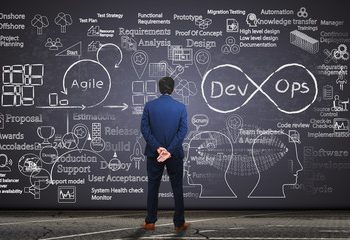


What is ERP? (Enterprise Resource Planning)
ERP stands for enterprise resource planning. Enterprise resource planning (ERP) is a software system that organizations use to manage day-to-day business activities, supporting automation and processes in accounting & finance, human resources, manufacturing, supply chain, services, procurement, project management, risk management, compliance and more. A complete ERP suite also includes enterprise performance management, software that helps plan, budget, predict, and report on an organization’s financial results.
ERP systems tie together a multitude of business processes and enable the flow of data between them. By collecting an organization’s shared transactional data from multiple sources, ERP systems eliminate data duplication and provide data integrity with a single source of truth. Today, ERP systems are critical for managing thousands of businesses of all sizes and in all industries.
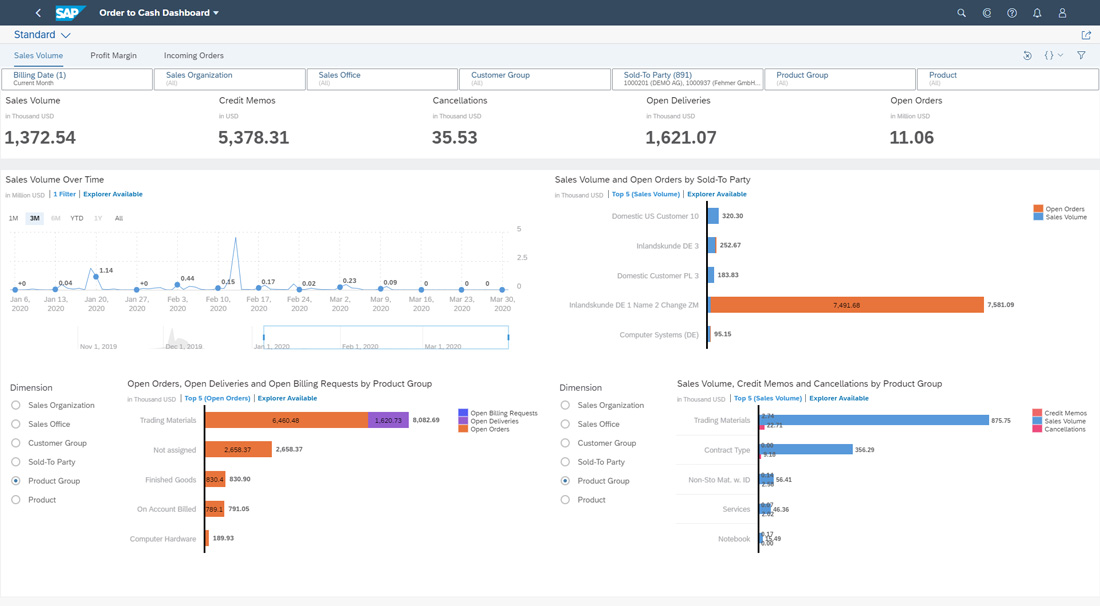
Features of Best ERP Solutions
Integration
The primary, and most significant, benefit of ERP is a central view of essential financial, operational and business data that can be shared across the organization in near-real-time.
Automation
ERP provides the ability to automate repeatable business tasks, such as payroll, order processing, invoicing, reporting and more. Automation minimizes the time spent on manual data entry, reduces errors and lets employees focus on more value-added tasks.
Data Analysis
Using data more effectively is a perennial priority for CFOs and business leaders. The power of data analysis is enabling employees to gather a wide variety of information and spin it into actionable insights on new business opportunities as well as ways to optimize current operations, reduce costs, spot fraud and better serve customers.
Reporting
Better reporting is almost as important to executives as more effective data usage. ERP reporting modules compile information about business operations into reports that empower stakeholders to make more informed decisions, enhance business processes and identify problem areas before the business suffers.
Tracking and Visibility
ERP platforms allow companies to track, surface and understand business metrix. They do this by facilitating companywide access to near-real-time data, breaking down information silos and offering reporting and analysis for every aspect of business operations.
Accounting
ERP accounting features deliver the ability to track, store and analyze financial data, such as accounts payable (AP), accounts receivable (AR), general ledger (GL), budgets and forecasting. Systems may perform more advanced tasks such as tax management, fixed assets management, revenue recognition and multi-currency reconciliation.
Financial Management
ERP systems assist finance teams with the management process by tracking, analyzing and reporting critical business data. In large, complex organizations, ERP systems are necessary tools for sound financial management.
Customer Relationship Management (CRM)
ERP systems with integrated CRM features bring customer relationship data into the mix, expanding the view of the business. All customer information—including contacts, order history, purchase orders and prospect status—is in a shared, easily accessible database.
Sales and Marketing
ERP systems with integrated CRM also benefit marketing and sales teams by making it easier for them to sell, upsell, generate quotes and purchase orders, forecast, manage commissions and track key details like profit margins and ratios.
The capabilities outlined above, from integration and automation through to financial management, CRM, and reporting, represent what a properly implemented ERP system delivers as a connected whole. The features are only as valuable as the platform they run on and the way that platform is configured for your specific business. For businesses in Maldives, this means ensuring the ERP you choose handles multi-currency transactions including MVR and USD, supports MIRA GST compliance, manages inventory across multiple locations, and connects to the procurement and HR processes that are central to how Maldivian businesses actually operate day to day.
With multiple ERP platforms available in the market, selecting the right one for your industry, size, and growth plans requires more than reading a feature list. PBSS implements SAP Business One, SAP S/4HANA Cloud, SAP Business ByDesign, SAGE 200, and Odoo across a wide range of Maldivian businesses, which means our recommendations are based on what genuinely fits your situation rather than what is easiest to sell. If you are in the process of evaluating your options, our detailed guide to the best ERP system in Maldives covers how the leading platforms compare, what Maldivian businesses should specifically look for before committing, and what a realistic implementation looks like at different business sizes.
PBSS has been implementing ERP systems for businesses across Maldives for over 20 years, with more than 350 live sites and 15 international awards recognising the quality of our implementations. Whether you are replacing a system that is no longer keeping pace with your growth, consolidating disconnected software into a single platform, or implementing ERP for the first time, our team will give you an honest assessment of what the right path forward looks like for your business. Contact us to arrange a consultation with no commitment required.
Our Customers Say
Great Organization with an excellent team. I'm very happy with the product. During the work process, they were very smart and willing to try out various things according to our requirements. I would recommend them to any organization which is looking for a PAY/HRM solution or any other business solution.


Mr. Dimuth Gamage Group IT Manager - Union Apparel
Since we are into manufacturing of Spices and related products, we cater to a highly competitive market. Also, Feelan has a very strong trading arm which is complicated with many pricing and segment schemes and the implementing partner requires deep knowledge in understanding the logics behind. Therefore, partnering with a reliable software solutions company that has the expertise and as well as the experience was a key requirement when we implemented the SAP Business One ERP. With PBSS we have managed to continue a successful partnership and the after-sales support has been excellent when it comes to all our requirements and add-ons.

Mr. Thushara Sampath Finance Manager - Freelan Enterprises
We have had a longstanding partnership with PBSS Group for almost a decade now and one of their first customers to go ahead with SAGE 200. Also digitizing processes with a reliable SFA & RD solution for all our sales force automation and re-distribution requirements was crucial and partnering with PBSS has indeed helped us analyse all aspects required to run our business and increase productivity which has helped us to make well-informed strategic decisions.

Mr. Dhanushka Silva Head of IT - Edinborough Products (Pvt) Ltd
We managed to improve our business in a very efficient and productive manner and all the information regarding my company is at a fingertip that allows me to take speedy management decisions.
PBSS dedicated team made it possible and are with us throughout.
Mr. R.P.M. Zalmy Managing Director - Edinborough Food Products
Sage Evolution ERP is the ERP solution we have been using for over 5 years to manage all the operations related to our manufacturing company as well as Distribution Company. Processes such as Manufacturing, Procurement, Inventory Control, Selling & Distribution, and Finance are 100% based with the ERP.
In addition RD System of our re-distribution operation runs with Sage and integrated with back end ERP to handle back and forward orders.
PBSS has been our implementation partner and working hand in hand to do more enhancements in the years to come,

Mr. Paranavithana Managing Director - Polycrome Electricals (Pvt) Ltd
Frequently Asked Questions
Enterprise Resource Planning software, or ERP, can be complex to understand. Here are 4 questions answered for you to help you get the most out of your ERP.
-
What Is an ERP System and Why Is It Used?
ERP is a type of software application used most often by medium and larger enterprises, and sometimes by smaller companies. ERP software focuses on integrating business processes into a single, streamlined database and user interface by offering modules for each of the core business areas: human resources, financials, inventory management, sales and customer relationship management, along with other business-critical functionalities. The main goal of ERP software is to integrate formerly separate databases and processes into a single source of truth, instead of these databases and processes functioning in silos.
-
What Are the Steps to Successful ERP Implementation?
Select the ERP solution which best matches your business goals and processes. Map the journey of your business interactions with the ERP system, including customizations. Create a clear implementation schedule and budget, including measurable goals and objectives. Identify a change management team, responsible for dealing with uncertainties, unexpected issues or resistance towards new business processes or IT systems. Create a team of stakeholders, including department heads and end-users, who will carry out various ERP implementation aspects, including providing or assisting with training. Clean and organize data to be imported from old systems into the new ERP database. Monitor and report on the implementation process to stakeholders throughout each step to avoid scope creep and the disruption of business productivity
-
What Problems Can ERP Solve?
Five main business issues can be solved by ERP software, namely communication challenges; repetitive manual tasks; customer data tracking; financial disorder and decision-making.
-
What Are Some Change Management Strategies for Successful ERP Implementation?
Adopting an appropriate ERP change management strategy reduces organizational resistance to change while extracting as much benefit as possible from the new system. Establishing a change management process reduces adverse incidents related to the transformation of IT and business processes. The goal of the change management process is to ensure that standardized methods and procedures are used for efficient and prompt handling of all changes, minimize the impact of change-related incidents service quality, and consequently improve the organisation's day-to-day operations.
Start Your Project with PBSS, the Leader in Business Software Solution Services.
Tell us about your business problem to start working on a solution with top software development experts.